*Note: this post originated on Dalhousie News and is authored by Michele Charlton from Dalhousie.
Seven researchers affiliated with Dalhousie University and the
Nova Scotia Health Authority have received $3.4 million in funding from the Government of Canada.
The funding is provided by the
Canadian Institutes of Health Research (CIHR) Project Grant Program, which is one of CIHR’s flagship funding programs. These multi-year grants are designed to support researchers at various stages in their careers as they conduct health research and knowledge translation projects that cover the full range of health research topics. Recipients are leaders in their fields and their projects tackle pressing health issues that matter to Canadians.
Highlights of successfully funded researchers
These world-leading researchers will be studying a wide range of topics, including: breast cancer; heart failure and fragility; crossed reflexes and their role in locomotor behaviour; kidney disease; the cost of a healthy diet in Canada; and how lipid synthesis in the nucleus affects a cell’s response to excess fat.
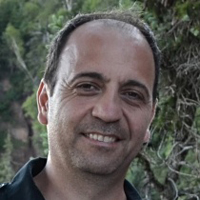 Dr. Turgay Akay
Department of Medical Neuroscience
Sensory control of muscle synergies during walking
From research taking place over the past century, it has been established that locomotor activity is controlled by a set of interconnected spinal interneurons (referred to as “central pattern generator”, or CPG). Sensory feedback has been shown to be important in aiding CPG function, so that the locomotor activity is always appropriate to the environmental need. In addition, walking in the natural environment is typically unpredictably variable, making sensory feedback necessary for functional locomotion.
The capacity to cope with unpredicted changes in the environment during walking gets compromised with advancing age. This leads to increased incidences of injuries related to falls in elderly people adding to costs to health care. This is why understanding the sensory feedback mechanisms that control locomotor activity and how these mechanisms change during aging can help elderly patients to regain the walking ability compromised by disease or aging.
The aim of Dr. Akay’s project is to provide important insights into sensory feedback mechanisms that regulate the locomotor activity and how these mechanisms are affected during aging. He plans to reach this goal by using a combination of mouse genetics, in vivo electrophysiology, and behavioural observations.
 Dr. Susan Howlett
Department of Pharmacology, Division of Geriatric Medicine
Why age, sex and frailty matter in heart disease
Heart failure is a serious disease that happens when the heart cannot pump blood very well. It occurs most often in older men and women, but how many years someone has lived is not the whole story. People age at different rates, and those who are aging quickly are said to be frail. This is important, because people frail people are much more likely to develop heart failure regardless of their age.
Dr. Howlett’s research group is discovering how to measure frailty in aging mice, using methods developed in people. They measured many different health problems in individual mice and used this information to estimate a frailty score. Their goal was to find out how age and frailty affect the heart and whether this differs between the sexes, and if these changes make hearts more susceptible to diseases like heart failure.
The work being done by Dr. Howlett will help us understand if treatment of frailty can improve heart function in older people.
Dr. Howlett’s funding comes from a Bridge Grant, which is part of the Project Grant program.
 Dr. Margot Latimer (Centre for Pediatric Pain Research, IWK Health Centre, and School of Nursing, Dalhousie University)
Dr. Debbie Martin (School of Health and Human Performance, Dalhousie University)
Dr. Mary McNally (Department of Dental Clinical Sciences and Department of Bioethics, Dalhousie University)
Dr. Sharon Rudderham (Health Director, Eskasoni Community Health Centre)
(Principal Investigators)
Using a co-learning approach to create a collaborative community-led solution to improve indigenous children’s ear and oral wellness and healthy development for school readiness
Indigenous children living in Canada have the highest rates of physical pain-related conditions, but are less likely to be treated for them. Untreated pain, including that associated with poor ear and oral health, have a profound impact on children in terms of their social-emotional wellness, hearing and language development and consequently, their school readiness.
The aim of this project is to create and evaluate a community-led care model to improve ear and oral health outcomes, and enhance school readiness for children (0-5 years) in eight First Nation communities in Wolastoqey and Mi’kma’ki territories.
The funding for this project comes from a Bridge Grant, which is part of the Project Grant program.
 Dr. Catherine Mah
School of Health Administration, Healthy Populations Institute
Cost of a healthy diet in Canada
Diet-related diseases are a public health priority. The availability of detailed dietary information from the 2015 Canadian Community Health Survey, which focused on nutrition, offers a chance to assess the actual cost of eating for households based on what they consume.
Dr. Mah will examine dietary intakes and whether they meet recommendations for nutritional adequacy based on healthy eating guidelines. They will also analyze monetary costs associated with healthier eating patterns, and assess whether there are disparities in dietary intakes or dietary costs for Atlantic Canada, a region with the highest burden of diet-related chronic diseases in Canada.
Dr. Mah’s study will offer evidence and potential insights for implementation of dietary guidelines as well as social and fiscal policies to improve the affordability of a healthy diet in Canada.
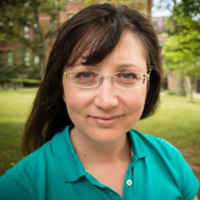 Dr. Paola Marcato
Department of Pathology, Department of Microbiology & Immunology Defining the mechanism of ALDH1A3 in breast cancer for the identification of novel therapeutic targets
To treat breast cancer patients more effectively, we need to better understand why cancer spreads and comes back years later after treatment. Breast tumors are made up of different cancer cells. Among them, cancer stem cell cells (CSCs) have the greatest potential to form new tumors, are very hard to kill and can cause cancer to spread.
Through her research, Dr. Marcato hopes to identify new targets for drugs that kill CSCs and stop the spread of cancer. This should decrease the chance the cancer will return. Her findings will make a major impact in understanding cancer and identifying novel drug targets, and will eventually lead to improved outcomes for patients.
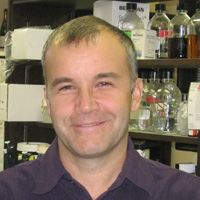 Dr. Neale Ridgway
Department of Pediatrics, Department of Biochemistry and Molecular Biology
How lipid synthesis in the nucleus affects a cell’s response to excess fat
The nucleus is usualy considered as the place where chromosomes store and transmit genetic information from one generation to the next. However, the nucleus is surrounded by a membrane comprised of lipids that keeps it separated from other compartments in the cells, but also allows some connections to these other compartments. It was thought that this membrane connection allowed the nucleus to receive lipids from other compartments instead of making them.
Dr. Ridgway’s research has shown that that nucleus contains enzymes that make lipids, and these lipids are stored within the nucleus. In addition, these stored lipids interact with a protein complex in the nucleus that controls the ability of the cell to respond to stress, such as DNA and oxidative damage.
This study will identify how the production of lipids in the nucleus potentially affects the ability of liver cells to respond to excess fat and prevent its accumulation, which is a cause of disease in the liver and other organs and tissues.
 Dr. Karthik Tennankore
Nephrologist, QEII Health Sciences Centre, Nova Scotia Health Authority
Associate Professor, Division of Nephrology, Department of Medicine, Dalhousie University
Frailty and the Kidney Transplant Wait List
Many people with advanced kidney disease will benefit from a kidney transplant. Some people are not eligible because they are considered frail, and have health conditions that put them at a risk of dying before receiving a transplant or high risk of deteriorating health after a transplant. Deciding who is able to receive a transplant involves a detailed evaluation of a person’s health and a review by transplant specialists.
Currently, it is not known how being frail might affect the health of those who are waiting for a kidney transplant. Knowing this information could be helpful in a number of ways.
Dr. Tennankore will be examining what happens to people who are frail and wait listed for a kidney transplant compared with those who are not frail. He hopes that the results of this study may lead to better allocation of kidney transplant organs and a more objective method of evaluating eligibility for the wait list.
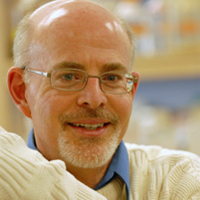 Dr. David Waisman
Department of Pathology, and Department of Biochemistry and Molecular Biology Significance of S100A10 (p11) in breast cancer tumor progression
Breast cancer is the second leading cause of cancer death in Canadian women. The high incidence of deaths linked to this cancer is due to spreading (metastasis) of the cancer to organs such as lungs and bones.
Cancer cell spreading is assisted by a protein called plasmin which chews other proteins surrounding the tumor cells thereby making the way for the cancer cells to move from the tumor site to distant organs. Plasmin is produced from a blood protein called, plasminogen, by the action of proteins located on the surface of the cancer cells. One such protein, S100A10 (p11), binds plasminogen on the cell surface and speeds up plasmin formation.
In his initial studies, Dr. David Waisman observed that breast tumors and metastasis to the lung are dramatically reduced in mice engineered not to make p11 (p11- null). Moreover, he has shown, by analyzing breast cancer patient tumor samples, that patients with low p11 levels in their breast tissue have a better rate of survival than patients with high p11 levels.
In the current project, Dr. Waisman and his team will investigate how p11 affects tumor growth and metastasis in breast cancer using a well-established breast cancer mouse model that is known to mimic human breast cancer, the PyMT mouse model. They will also investigate if the plasmin generated by p11 is important for the ability of the cancer cells to develop tumors, leave the tumor site and/or grow in other tissues, and if the reduction in tumor growth seen when cancer cells cannot produce p11 is due to decreased cancer cell growth or increased cancer cell death. They will also determine if p11 produced by the other cells in the tumor that support cancer cell development and growth are important or necessary for tumor growth and metastasis.
Identifying the mechanisms by which p11 contributes to tumor growth and metastasis will facilitate the development of new therapies to block tumor growth and metastasis by specifically targeting p11.
More information about the Project Grant program can be found on the
CIHR website.


